

Expand onsite wastewater capacity at power plants in 2026.
Power generation facilities expand onsite wastewater capacity three ways: recycling water back into cooling and steam processes, cutting the total volume of coal ash water, blowdown, and brine that needs storage or treatment, and redesigning systems around the discharge limits set out in 40 CFR Part 423, the federal rule governing steam electric wastewater. Facilities that pair evaporation-based volume reduction with reuse buy the most headroom without a full plant expansion.
Key takeaways
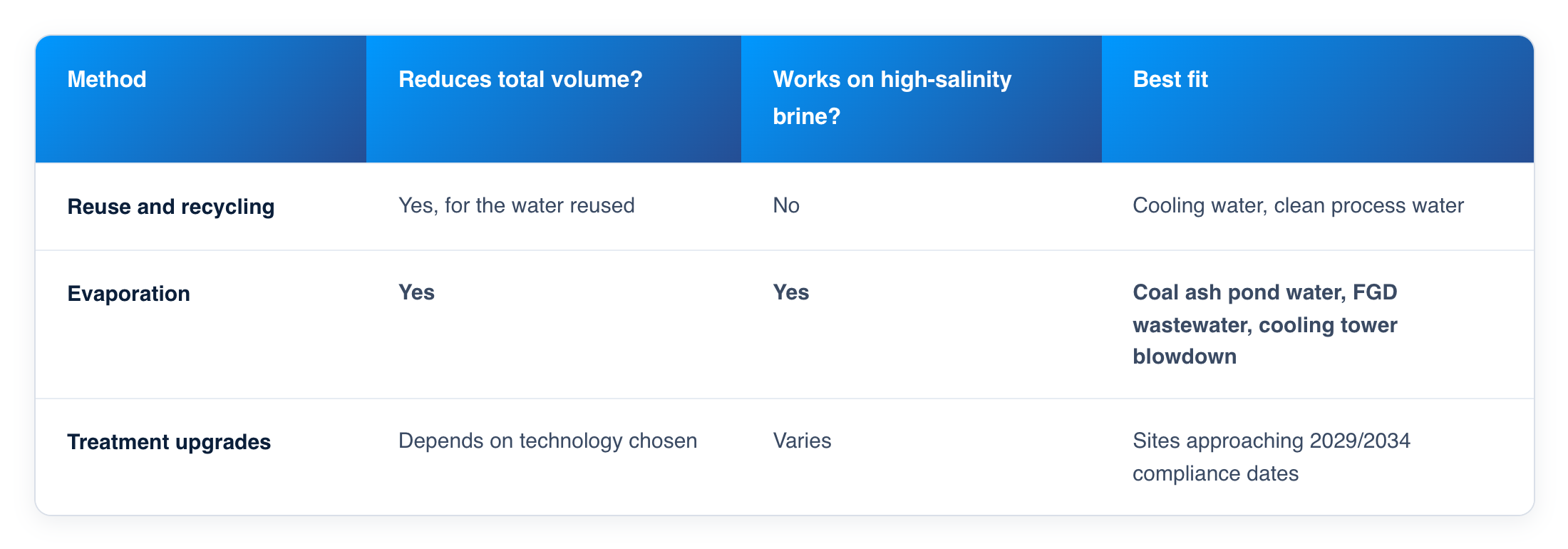
Reuse and recycling reduce the water entering the wastewater stream. Recirculated cooling and process water never becomes a treatment or storage problem.
Evaporation is the fastest way to shrink existing wastewater volume. It removes water physically from coal ash water, blowdown, and brine streams, rather than managing around the volume already generated.
Compliance is a design input, not an afterthought. 40 CFR Part 423 sets tightening deadlines for FGD wastewater and combustion residual leachate through 2029 and 2034, and capacity plans built around those dates avoid a second retrofit later.
High-salinity streams are usually the actual bottleneck. Coal ash pond water, FGD wastewater, and cooling tower blowdown are what push a site past its storage limit, not general process water.
Why wastewater capacity is under pressure at power generation facilities.
Roughly 914 steam electric power generating facilities operate in the United States under effluent limitations that have been revised repeatedly since 1974, most recently in 2024, with a 2026 proposal specifically addressing unmanaged combustion residual leachate still open for comment. Coal, oil, and nuclear plants running a thermal steam cycle fall under this category; facilities without a steam cycle, such as most solar or wind sites, don't.
The practical effect for coal-fired plants is a set of hard compliance dates under 40 CFR Part 423. Flue gas desulfurization (FGD) wastewater faces a no-discharge standard by January 2029, extendable to December 2034 with a certification statement on file. Sites still relying on the storage and treatment footprint they were built with are the ones that hit capacity limits first, since neither the volume of ash pond water and brine generated nor the compliance deadline is moving.
Three ways to expand onsite wastewater capacity.
Water reuse and recycling. Routing cooling tower blowdown or process water back into plant operations keeps that volume out of the wastewater stream entirely. This is the cheapest lever available, but it only works on water clean enough to reuse; high-salinity brine and coal ash water typically aren't.
Wastewater volume reduction through evaporation. Mechanical evaporation removes water from coal ash ponds, FGD wastewater, and other high-TDS streams onsite, shrinking the volume that needs storage, hauling, or further treatment. This is the direct answer to a capacity problem that reuse alone can't solve, since it works on the streams reuse can't touch.
Treatment system upgrades built around compliance deadlines. Retrofitting or adding treatment capacity sized to the 2029 and 2034 FGD and leachate deadlines avoids building toward a standard that's already scheduled to tighten again.
XPEL evaporation systems.
XPEL's evaporators for power generation are proven, field-tested systems built to run continuously on the wastewater streams power generation sites actually produce, without relying on chemical-intensive treatment methods. XPEL has delivered 600+ projects across 30+ countries.
Coal ash water. Evaporation lowers stored volume in ash ponds without interrupting plant operations.
Process water. High-throughput systems handle the volume swings that come with variable plant output.
Saline streams. Evaporation concentrates and reduces brine volume regardless of salinity level.
Caustic wastewater. Systems are built to run on a wide pH range without added chemical treatment.
Real-time responsiveness. An integrated Environmental Management System adjusts performance to changing conditions, so volume reduction stays predictable as inflows and water quality shift.
Case study: coal ash pond dewatering in Queensland, Australia
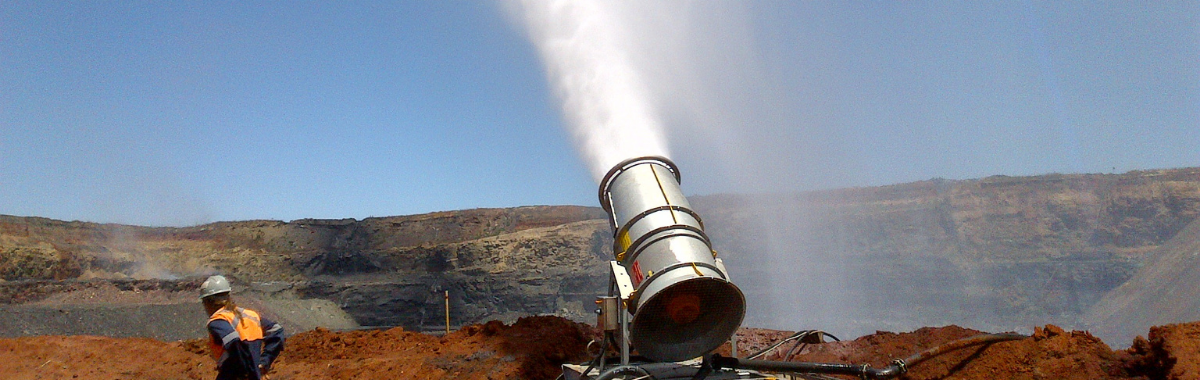
Rising water levels in a coal-fired power plant's ash ponds were putting pressure on storage capacity and raising compliance risk. XPEL installed six evaporation units (five 200/100 evaporators and one 400/200 unit) as detailed in the QLD coal ash pond dewatering case study, delivering a combined throughput of 1,400 GPM and stabilizing pond levels without interrupting power generation.
Case study: brine wastewater management in Montana, USA
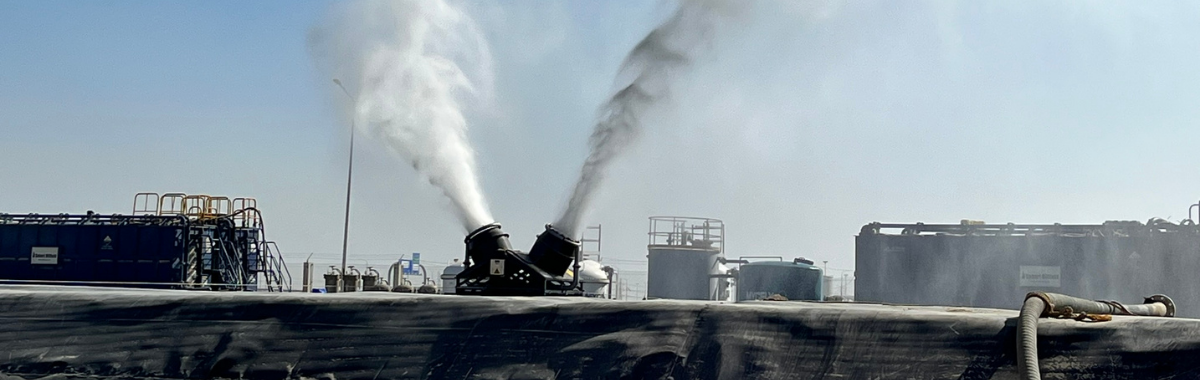
A coal-fired power station in Montana could run evaporation equipment only from May to October due to extreme winter conditions, and needed to remove a large volume of brine wastewater within that short window. As detailed in the Montana power station case study, XPEL delivered 10 stainless steel mechanical evaporators, engineered to run 12 to 24 hours a day across the six-month treatment cycle. The system processed up to 4,000 GPM and, running continuously, evaporated more than 2.9 million gallons of brine per day, keeping the station within its seasonal operating limits.
Get a site-specific evaporation analysis.
For sites facing the 2029 and 2034 FGD deadlines, adding evaporation capacity ahead of those dates is generally a smaller capital outlay than expanding conventional treatment, since it reduces the volume that treatment has to handle rather than treating the same volume more intensively.
Facilities weighing their options against a compliance deadline can request a site-specific evaporation efficiency analysis from XPEL, covering achievable water reduction and compliance readiness for their own ash pond or brine characteristics.
Frequently Asked Questions (FAQs)
How can power generation facilities improve wastewater management capacity?
Power generation facilities improve wastewater capacity by combining reuse and recycling, onsite evaporation to reduce coal ash pond water, FGD wastewater, and brine volume, and treatment upgrades sized to the 2029 and 2034 compliance deadlines under 40 CFR Part 423, rather than expanding storage alone.
Which water solutions help power generation facilities manage excess wastewater?
Evaporation systems built for high-salinity, high-TDS streams, such as XPEL's evaporators, address excess wastewater at power generation sites by physically removing water from coal ash ponds, FGD wastewater, and cooling tower blowdown, the streams that typically push a site past its storage capacity.