

XPEL evaporator system for food processing plant wastewater.
Wastewater management in food processing plants means pretreating, storing, and eventually disposing of or reusing water from washing, blanching, cooling and cleanup, all within the limits set by the EPA's effluent guidelines program. Onsite evaporation removes volume before it reaches storage or discharge, which matters most when production increases faster than tanks, ponds or permits can absorb.
Key takeaways: wastewater volume at a glance.
Wastewater management in food processing plants starts with volume. Cutting what needs storing, hauling or discharging matters as much as hitting the numeric limits.
Production growth adds volume faster than output. More shifts mean more wash-downs and rinses, not just more product.
Storage capacity runs out first. Tanks and lagoons sized for last year's baseline fill before permits or hauling budgets become the issue.
Discharge limits track food category. Dairy, meat and poultry, seafood and canned produce each sit under a different federal effluent guideline.
Reuse works the other side of the ledger. Less wastewater out means less water intake needed for non-product uses.
Evaporation removes volume before it's a storage problem. Onsite evaporation cuts whatever needs to be stored, trucked or discharged.
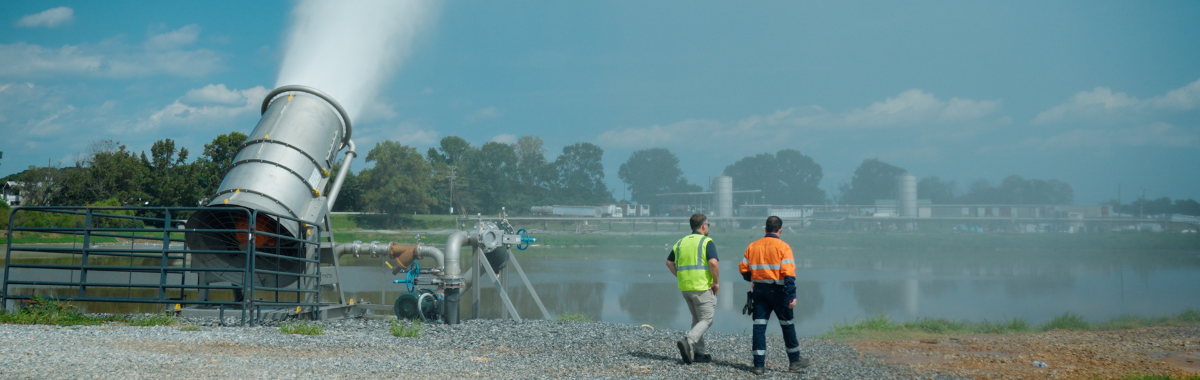
Production increases strain wastewater storage capacity.
Increased production impacts wastewater storage in food processing plants by raising demand faster than the increase in output alone. Extra shifts don't just make more product, they run more wash cycles, more equipment rinses, and more cooling water through the same drains, and cleaning water scales with the number of production cycles rather than total units made.
What this looks like on the ground:
Lagoons and tanks fill sooner than expected. A pond with margin at last year's volume runs close to capacity once a second shift or new line comes online.
Hauling frequency climbs faster than production. Trucks that came weekly start coming twice a week, and cost tracks the trips, not the tonnage.
Peak inflow events become higher-stakes. A facility already running close to capacity has less room to absorb a cleaning cycle that runs long or a wash-down that runs heavy.
Reducing wastewater volume starts onsite, not at the discharge point.
Food processing facilities reduce wastewater volumes by cutting water use in production, reusing water onsite where quality allows, and evaporating what's left before it reaches storage or discharge. The first two require process and plant changes. The third works with the wastewater a plant already generates.
Process changes reduce the water going down the drain in the first place, through dry cleanup steps before wash-downs, tighter rinse cycles, or process water metering.
Onsite reuse redirects water that's clean enough for a second use, such as non-product-contact cooling or initial equipment rinses, instead of sending it straight to wastewater. This is the water reuse and conservation side of the equation, distinct from evaporation, which removes volume rather than reusing it.
Mechanical evaporation removes water from the wastewater stream that's left after the first two steps, so less volume ever reaches a tank, a truck or a discharge point.
XPEL water evaporators use a mechanically enhanced evaporation process, converting process water into fine droplets for rapid atmospheric evaporation and reducing the hydraulic load reaching ponds, sumps and downstream treatment assets. The water removed this way never becomes a storage, hauling or discharge-permitting problem, because it never leaves the site as liquid.
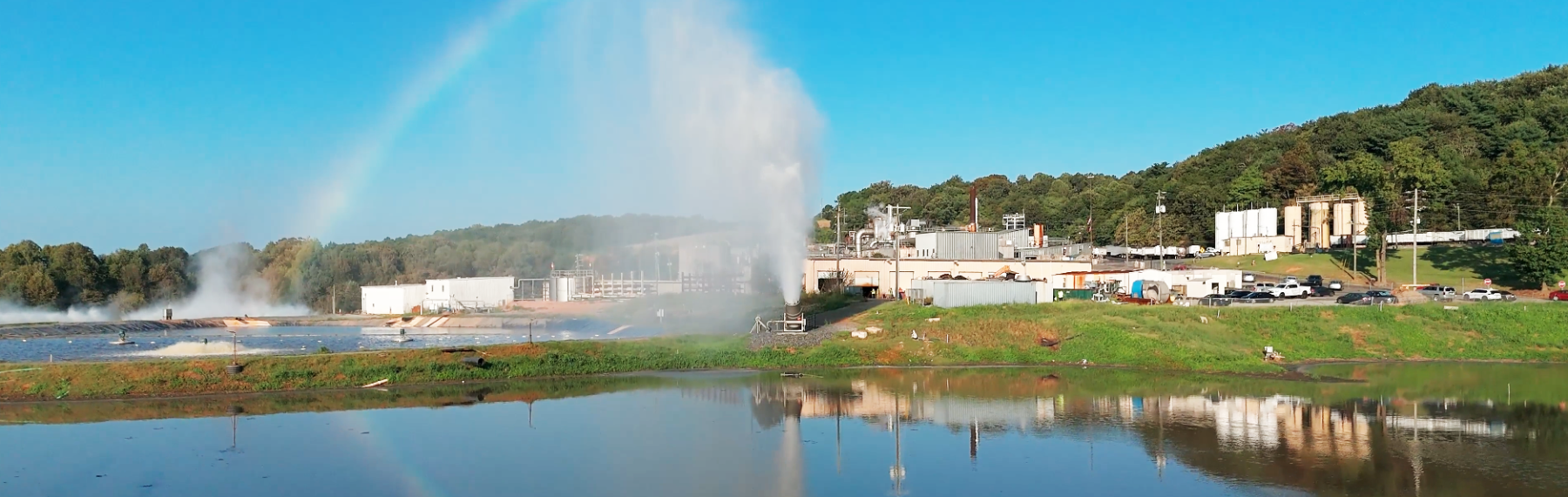
Comparing wastewater disposal pathways.
Evaporation is one of three ways that volume can leave a plant, alongside the two pathways more commonly associated with industrial wastewater treatment: hauling and municipal discharge. Here's how the three compare directly.
Storage and hauling keeps volume constant and trucks it off site, so cost sits in trucking frequency, which rises with production.
POTW discharge also keeps volume constant, sending it to municipal treatment instead, so cost sits in surcharges that scale with flow and pollutant load.
Onsite mechanical evaporation reduces volume before disposal, so cost sits in the capital and operating cost of the evaporator system itself rather than in what happens after the water leaves the site.
Discharge limits depend on which food category a plant falls under.
Whichever pathway a plant uses, the water it stores, hauls or discharges still has to clear a federal limit, and that limit depends on food category rather than plant size or output.
Dairy products processing falls under 40 CFR Part 405.
Canned and preserved fruit and vegetable processing falls under 40 CFR Part 407.
Canned and preserved seafood processing falls under 40 CFR Part 408.
Meat and poultry products fall under 40 CFR Part 432.
Indirect dischargers to a municipal system also fall under the general pretreatment definitions at 40 CFR 403.3, which covers passthrough and interference at the receiving treatment plant.
None of these limits change because a plant evaporates volume onsite. What changes is how much water a plant has to manage under whatever limit applies, since a smaller volume moving through a permitted or metered pathway leaves more room under the same limit.
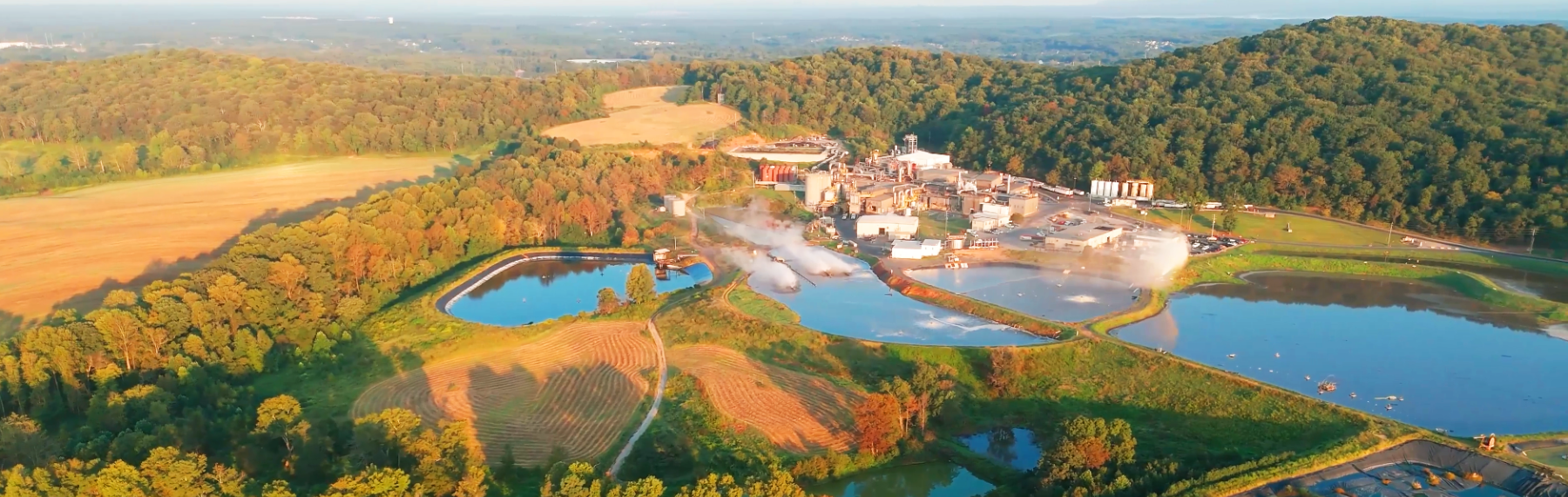
An Atlanta-area rendering plant solved a wastewater pond nearing capacity.
A large poultry rendering plant in Atlanta, Georgia ran into the exact storage crunch described above, and it shows why a bigger pond usually isn't the actual fix.
Incoming material at the plant runs roughly 70% water, and the existing spray tree system needed a large footprint to process it. Operating in the Chattahoochee River Basin left little room for more land application, and zero liquid discharge requirements meant the plant needed a genuinely new disposal pathway as its holding pond closed in on capacity.
XPEL deployed a single 600/300 land-based evaporator, installed within weeks, targeting 350,000 gallons of evaporation a day. No major infrastructure changes were needed beyond power for the unit's pump and fan.
The system delivered:
Up to 475,000 gallons evaporated a day, exceeding the 350,000-gallon target by more than 125,000 gallons.
Pond levels dropping more than a foot a week, according to the plant's own water team.
Installation within weeks, using a unit that required no major site infrastructure changes.
Watch how the XPEL system improved the operations of the facility: Turn-key water management solution for Atlanta, Georgia food processing giant.
Talk to XPEL about wastewater volume before the next production increase.
Storage capacity and hauling costs become urgent right when a plant can least afford downtime to fix them. XPEL's evaporator systems are sized to a facility's actual throughput, so operators can address volume before a production increase turns a manageable tank into a full one. Connect with XPEL water management experts today.
Frequently Asked Questions (FAQs)
How does increased production impact wastewater storage in food processing plants?
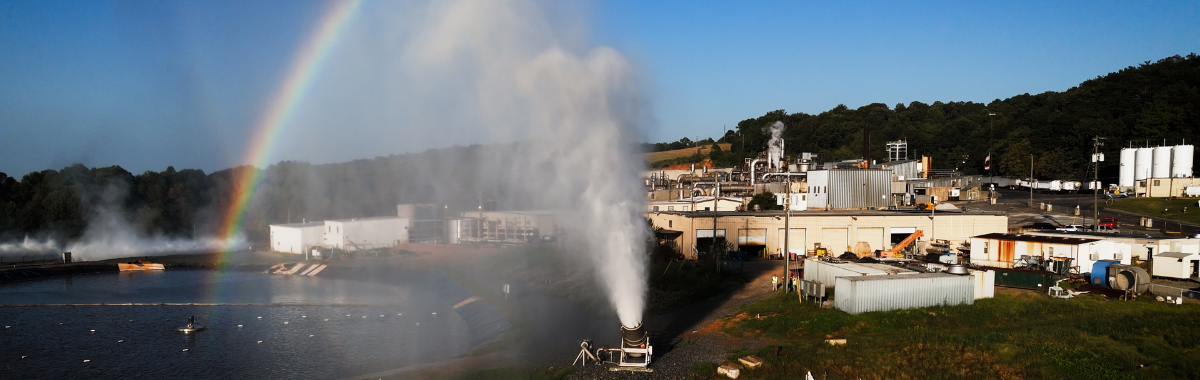
Increased production raises wastewater storage demand faster than output alone would suggest, because wash-downs, equipment rinses and cleanup cycles scale with the number of production runs, not just total volume made. Storage tanks and lagoons sized for a lower baseline fill sooner, driving up hauling frequency and disposal cost. At one Atlanta-area rendering plant, a holding pond nearing capacity was brought back under control with a single XPEL evaporator unit drawing down up to 475,000 gallons a day.
How can food processing facilities reduce wastewater volumes?
Food processing facilities reduce wastewater volumes by cutting water use in production, reusing water onsite where quality allows, and evaporating remaining wastewater before storage or discharge. XPEL's mechanically enhanced evaporation process removes water from the wastewater stream onsite, converting it into fine droplets for rapid atmospheric evaporation.
Which federal regulations govern food processing wastewater discharge?
Federal effluent guidelines under 40 CFR Subchapter N set discharge limits by food category: Part 405 for dairy, Part 407 for canned fruit and vegetables, Part 408 for seafood, and Part 432 for meat and poultry. Indirect dischargers to municipal systems also fall under the general pretreatment definitions at 40 CFR 403.3.
Does onsite evaporation change a plant's discharge permit requirements?
No. Evaporation reduces the volume of wastewater a plant has to store, haul or discharge, but the applicable effluent limit under 40 CFR Subchapter N stays tied to the plant's food category regardless of volume.