

Beyond water treatment: The landfill leachate disposal challenge in the U.S.
Landfill leachate is a persistent lifecycle risk that grows more concentrated and complex as landfills age.
Management involves handling a high-strength liquid with increasing salinity, ammonia, and total dissolved solids (TDS). In mature landfills, TDS commonly ranges from 10,000 to 80,000 mg/L and is frequently accompanied by heavy metals and per- and polyfluoroalkyl substances (PFAS).
Regulatory scrutiny is intensifying, with the U.S. EPA moving to revise Effluent Limitation Guidelines under 40 CFR Part 445 after PFAS was detected in leachate at more than 95% of over 200 surveyed U.S. landfills.
These pressures, compounded by concentrate handling challenges and narrowing disposal pathways, are pushing operators to combine conventional treatment with volume reduction to improve control, manage cost, and maintain long-term resilience.
Key takeaway summary
Landfill leachate management under pressure
Increasing strength: Leachate salinity, TDS, ammonia, and contaminant load rise as landfills age
Treatment limits: RO and UHPRO recovery is constrained by osmotic pressure and fouling
Residual challenge: Concentrate volumes still require disposal or further management
Regulatory scrutiny: Discharge limits and PFAS oversight are tightening, with PFAS detected in leachate at over 95% of U.S. landfills surveyed by EPA
Strategic shift: Treatment plus volume reduction improves control and predictability
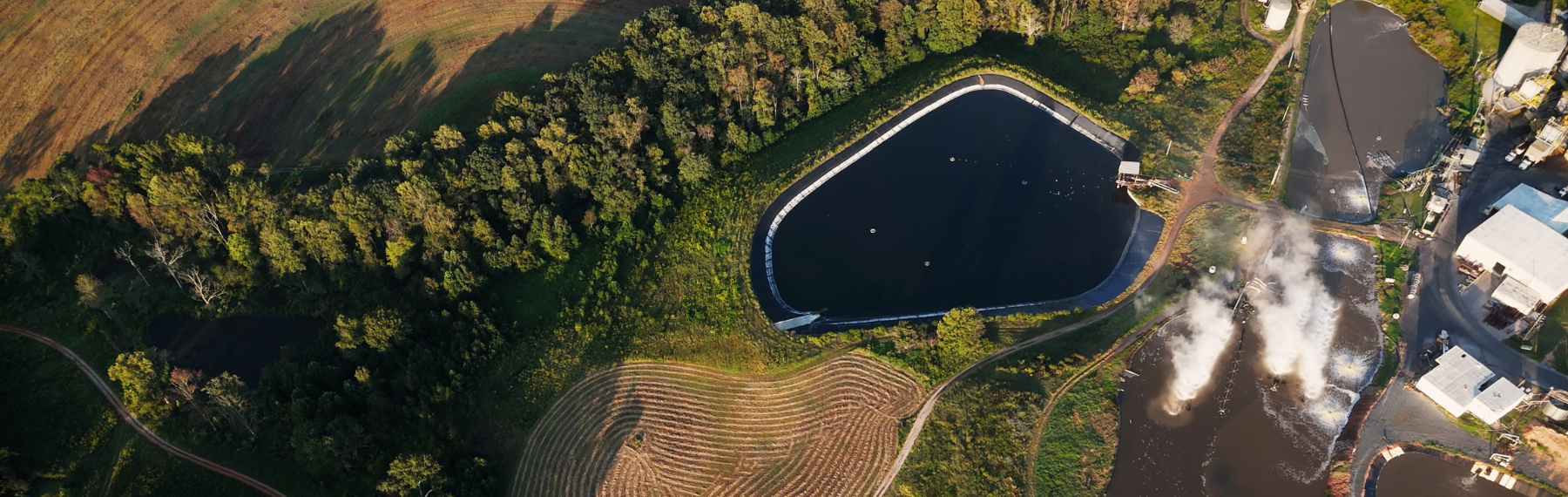
What drives landfill leachate volume and complexity
Landfill leachate volume and chemistry are driven by a combination of site, operational, and lifecycle factors. As a landfill progresses through its biochemical phases, organic decomposition, moisture movement, and waste composition interact to produce leachate that becomes more concentrated and chemically complex over time.
Key drivers include:
Rainfall infiltration and stormwater interaction
Waste composition, including industrial and municipal inputs
Landfill age and anaerobic degradation processes
Leachate recirculation practices used to accelerate waste stabilization
According to An Extensive Analysis of Combined Processes for Landfill Leachate Treatment published in MDPI, landfill leachate chemistry evolves significantly with age making removal increasingly difficult with conventional treatment alone.
These dynamics explain why leachate rarely becomes easier to manage. Over time, treatment systems must contend with higher strength influent, greater variability, and declining margins for compliance - particularly as emerging contaminants like PFAS persist and accumulate, heightening regulatory attention.
Why conventional leachate treatment reaches limits
Even with ultra-high-pressure reverse osmosis (UHRO), landfill leachate treatment eventually reaches practical limits.
Biological processes struggle with high ammonia, toxicity, and refractory organics common in aged leachate (BOD₅/COD often <0.1-0.3), limiting organic removal. Reverse osmosis (RO) enhances effluent quality but faces declining recovery (typically 70-85%) as salinity rises, increasing osmotic pressure, energy use, and fouling/scaling risks from inorganic/organic precipitation. Ultra-high-pressure RO (UHPRO) extends recovery but still generates unavoidable concentrate (15-30% of feed).
The comprehensive review from MDPI confirms that standalone treatments are insufficient for complex pollutants in mature leachate, requiring combined processes for higher removal (e.g., up to 99% COD) and efficiency.
Treatment alone improves quality but does not resolve residual volume challenges.
The concentrate and disposal bottleneck
Residual concentrate is where landfill leachate management often becomes most constrained. As treatment recovery plateaus, concentrate volumes persist and require disposal through hauling, offsite treatment, evaporation ponds, or other permitted pathways.
Each option carries cost, permitting, and long-term liability considerations:
Hauling increases operational expense and exposure to transport risk
Offsite disposal options are increasingly limited and costly
Evaporation ponds require land availability and regulatory approval
Long-term concentrate storage raises environmental and compliance concerns
Industry guidance from the Solid Waste Association of North America (SWANA), including its Applied Research Foundation report on PFAS Management and Treatment Options for Landfill Leachate, highlights that handling concentrates, particularly from membrane-based systems, presents significant operational and financial challenges for landfill operators.
This is the point where leachate management shifts from a treatment challenge to a disposal and logistics problem.
How volume reduction fits into landfill leachate management
Volume reduction plays a stabilizing role in landfill leachate management once treatment recovery reaches its limit. Rather than replacing treatment, volume reduction addresses the residual stream that treatment systems cannot eliminate.
By reducing the total volume of concentrate requiring disposal, operators can:
Lower hauling frequency and cost
Reduce dependency on constrained disposal pathways
Improve predictability in long-term leachate planning
Maintain compliance as leachate strength increases
Evaporation is particularly effective downstream of RO or UHPRO, where water quality has already been improved but volume remains problematic. This approach decouples disposal risk from treatment recovery limits and provides an additional control layer when regulatory or operational conditions change, offering resilience against tightening PFAS oversight and concentrate management pressures.
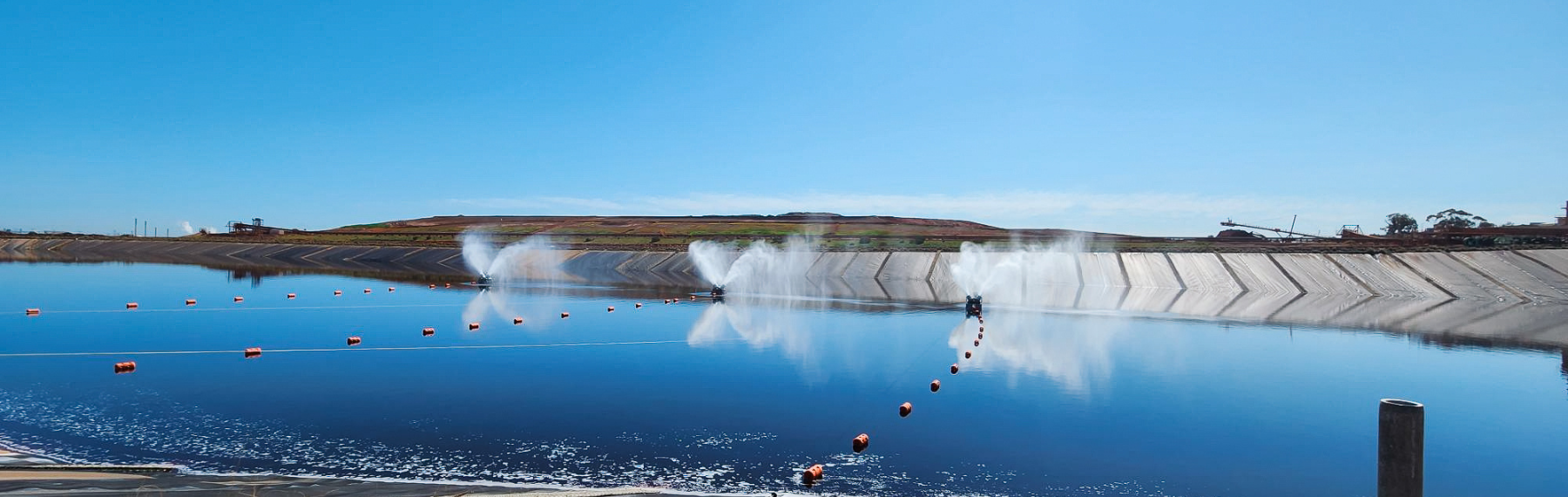
XPEL capabilities for landfill leachate management
XPEL provides advanced mechanical evaporation systems designed to support landfill leachate management in high-strength, variable conditions.
Key capabilities include:
High tolerance for elevated salinity and dissolved solids
Ability to handle fluctuating flow rates and seasonal variation
Modular, relocatable system designs
Integration downstream of biological treatment, RO, or UHPRO
Minimal permanent infrastructure requirements
XPEL systems are engineered to operate alongside existing treatment assets, reducing residual volumes before final disposal. This approach allows landfill operators to stabilize leachate management without overhauling treatment systems or expanding disposal infrastructure, particularly valuable amid evolving regulatory demands for PFAS control.
Landfill leachate management as a lifecycle strategy
Landfill leachate is not a short-term operational issue. It is a lifecycle challenge that intensifies as facilities age and regulatory expectations evolve. Systems designed for early-stage leachate rarely perform the same way decades later.
Operators that treat leachate management as a strategic, long-term function are better positioned to control cost and compliance risk. Combining treatment, reuse where feasible, and effective volume reduction allows facilities to adapt as leachate chemistry and volumes change. This integrated approach transforms leachate from a reactive burden into a managed operational variable, especially in light of ongoing EPA efforts to strengthen PFAS discharge standards.
As landfill leachate becomes more concentrated and disposal options tighten, operators are reassessing how residual volumes are managed beyond treatment. Reducing leachate volume can improve cost predictability, protect disposal pathways, and support long-term compliance amid heightened regulatory scrutiny.
XPEL works with landfill operators to evaluate where volume reduction can complement existing leachate treatment systems under real-world operating conditions.
For more information on integrating advanced mechanical evaporation technology in your water management strategies, contact the XPEL team today.
FAQs
Why does landfill leachate become harder to treat over time?
As landfills age, waste decomposition increases dissolved solids, ammonia, and complex contaminants, raising leachate strength and treatment difficulty.
What limits reverse osmosis recovery for landfill leachate?
High salinity, osmotic pressure, fouling, and scaling constrain recovery and increase energy demand at higher concentrations.
Why is concentrate disposal such a challenge?
Residual concentrate volumes remain after treatment and face limited, costly disposal pathways with increasing regulatory oversight, including PFAS-related restrictions.
Can evaporation replace leachate treatment systems?
Evaporation is typically applied downstream of treatment to reduce residual volumes, not to replace treatment processes.
How can landfill operators improve long-term leachate control?
By combining treatment with volume reduction strategies, operators can stabilize disposal risk as leachate strength and volumes increase.