

Food processing wastewater reduction in 2026.
Food processing is a water-intensive operation, so wastewater volume scales with production. Water runs through cleaning, sanitation, peeling, cooking, cooling, and product transport, then again through equipment washdowns, which means more shifts and higher throughput put more liquid into a storage system that holds a fixed buffer. Facilities reduce that volume on three fronts: cutting water use at the source, reusing and recycling water across duties of different quality, and reducing stored volume directly. Where the priority is cutting stored volume quickly rather than recovering reuse-grade water, mechanical evaporation removes water on site without chemicals and moves a holding pond towards near zero discharge.
Key takeaways: What food site operators need to know about wastewater volume.
Production and wastewater scale together: Higher throughput means more cleaning, sanitation, and process water, so wastewater inflow rises and fixed storage fills faster.
Storage is the pressure point: Ponds and tanks hold a set buffer, and when inflow outpaces outflow the result is overflow risk, hauling cost, and compliance exposure.
Volume reduction works on three levers: source reduction, water reuse, and on-site volume reduction, used together rather than one in isolation.
Mechanical evaporation cuts stored volume directly: It removes water on site without chemical additives, which suits sites where reducing volume matters more than producing discharge-quality water.
Minetek's fit: chemical-free evaporation in holding ponds, in land-based and floating forms, proven on food sites including a US animal feed facility where a pond near capacity was brought back under control.
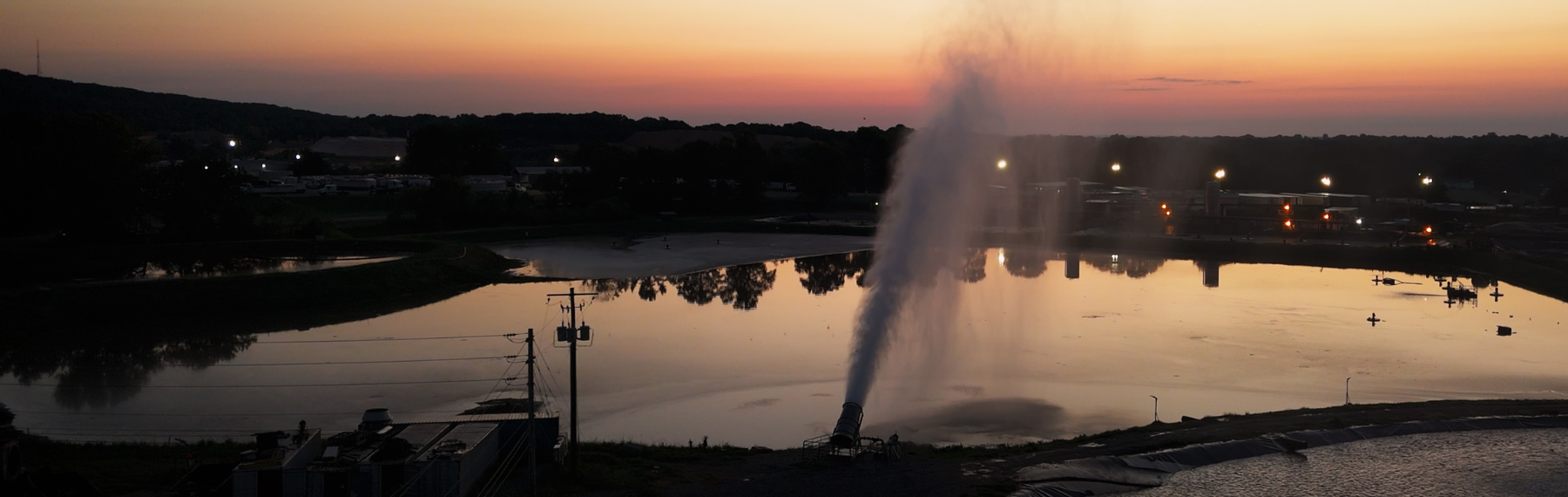
Rising production fills wastewater storage faster
When production rises, wastewater inflow rises with it, but storage capacity does not. Two forces pull against each other:
Inflow scales with throughput: the water used in cleaning, sanitation, cooking, cooling, and clean-in-place cycles is roughly proportional to production, so more shifts and changeovers mean more wastewater.
Storage is a fixed buffer: a holding pond, tank, or lagoon sits between what a plant generates and what it can treat, reuse, or dispose of, and that capacity does not grow to match a production increase.
The result is a shorter buffer before storage fills, and that is where the operational risk sits. Passive evaporation ponds depend on weather and cannot accelerate to match higher inflow, while outflow through treatment or off-site hauling is capped by plant capacity and cost. As the gap between inflow and outflow widens, the consequences follow:
Pressure on storage infrastructure
Rising overflow risk in wet seasons
More frequent and costly tankering
A higher chance of breaching discharge limits
Maintaining site water balance, where inflows from processing are equilibrated against outflows through evaporation, reuse, or discharge, is what keeps a growing plant inside its permits.
Wastewater volume reduction in food processing plants
Food processing facilities reduce wastewater volumes through three levers, usually applied together: source reduction, water reuse and recycling, and on-site volume reduction. Conventional treatment sits alongside them to manage contamination, though it changes quality more than volume.
Source reduction: the first step, because the cheapest litre of wastewater is the one never generated. Measures include high-pressure low-volume washing systems, jet and nozzle upgrades on sprays, auto shut-off valves, clean-in-place systems, and better process control to catch upsets before they create off-spec product and extra washdown.
Water reuse and recycling: cascade water from high-quality to lower-quality duties, for example fresh water for final rinsing, then initial washing, then equipment or floor cleaning, with closed-loop systems recycling water within a single process. Reported savings from cascading reuse commonly fall in the 30 to 50 per cent range, though the achievable figure depends on the quality each duty requires, since water touching food usually has to meet potable standards.
Conventional treatment: systems such as dissolved air flotation remove fats, oils, grease, suspended solids, and organic load so a stream can meet discharge limits. This matters for compliance, but it cleans and concentrates the water rather than removing the bulk of it, so on a storage-constrained site it does not solve the volume problem on its own.
On-site volume reduction: mechanical evaporation removes water directly from the holding pond, acting on volume that is already in storage rather than the volume entering it. That makes it the fit for sites where the immediate problem is a pond filling faster than it can be emptied.
| Approach | What it does | Effect on stored volume | Best fit |
|---|---|---|---|
| Source reduction | Cuts water used in washing, sanitation, and transport through efficient nozzles, low-volume washing, auto shut-off valves, and CIP systems | Lowers the volume generated at the source | Every facility, as the first step before treatment or disposal |
| Water reuse and recycling | Cascades water from high-quality to lower-quality duties and closes loops within processes | Reduces fresh water drawn and effluent produced | Sites with clear quality tiers across rinsing, washing, and floor cleaning |
| Conventional treatment (e.g. DAF) | Removes FOG, solids, and organic load to meet effluent limits | Improves quality, limited direct effect on volume | Streams that must hit BOD, COD, pH, and nutrient limits before discharge |
| Mechanical evaporation | Atomises wastewater and accelerates evaporation to remove water on site | Cuts stored volume directly, towards near zero discharge | High-volume holding ponds where reducing stored water is the priority |
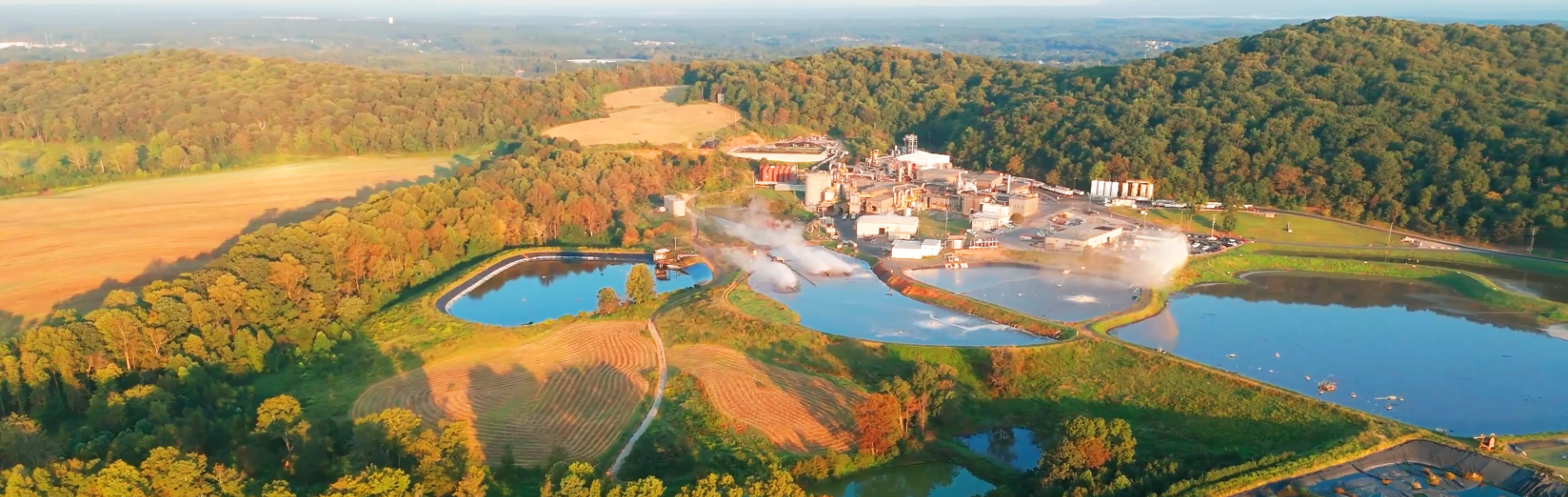
Mechanical evaporation for food processing wastewater.
Mechanical evaporation is the option that reduces stored volume rather than just treating it. It atomises wastewater into fine droplets, as small as 50 to 200 microns, which multiplies the surface area available for evaporation many times over compared with a passive pond and lets a site shed large volumes regardless of how still the weather is. It works without chemical additives or a membrane train, so it adds little operational complexity to a plant already managing food safety and sanitation.
For food sites, the case is about storage pressure and compliance. XPEL water evaporators bring four things to that:
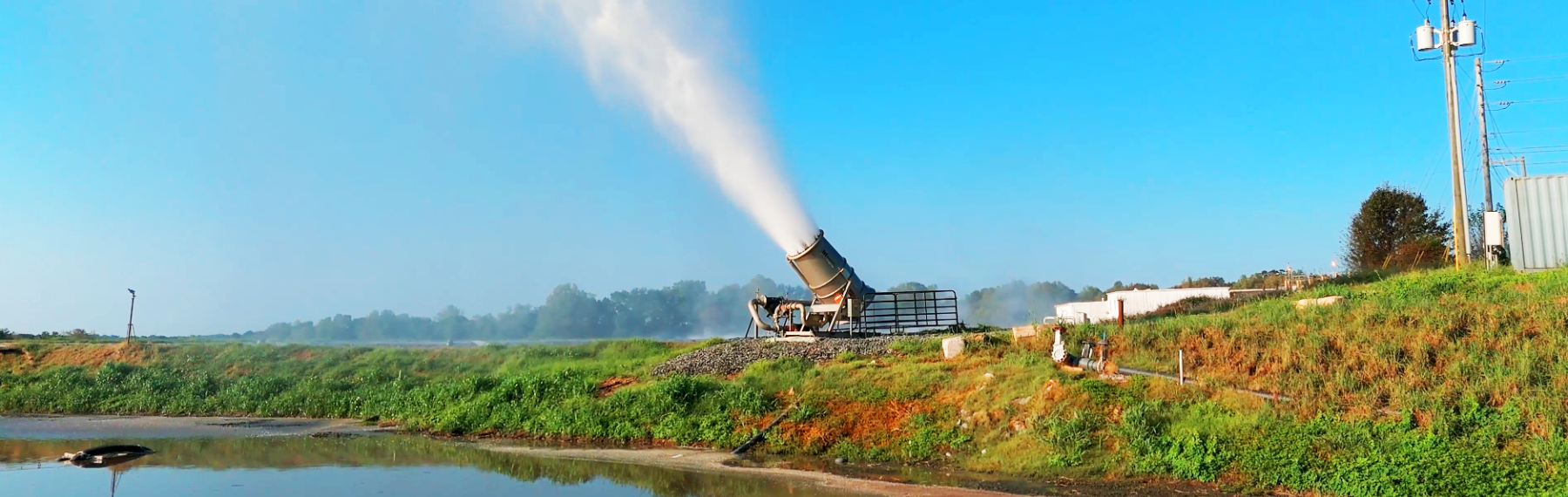
Chemical-free, energy-efficient water loss: they accelerate evaporation from holding ponds without additives, reducing discharge volumes towards near zero and cutting the compliance risk and the hauling or municipal fees that come with excess water.
Land-based and floating forms: units suit ponds, lagoons, and other storage, with capacity up to 135 m³/hour, or 600 GPM, per system.
Rapid deployment: systems can be set up without permanent construction, which matters when a pond is already approaching its limit.
Site-specific sizing: Minetek models projected evaporation against a plant's own climate using humidity, rainfall, elevation, pan evaporation, total dissolved solids, and temperature, across a full year.
Proven on a food site: At a US food processing facility, a holding pond had neared capacity and was threatening to overflow. XPEL turn-key land-based evaporation system rated at 600 GPM, with integrated environmental controls for real-time optimisation, brought the pond back under control, maintained regulatory compliance, and held the site's water balance without interrupting operations.
With more than 600 evaporation systems deployed across over 30 countries, XPEL, powered by Minetek, has demonstrated that mechanical evaporation can be up to ten times more cost-effective than new dam construction, water haulage, water pumping, sprinkler irrigators, and conventional treatment.
Is your holding pond filling faster than you can empty it?
XPEL can model the evaporation rate achievable on your site against your own climate and water chemistry, then size a land-based or floating system to bring stored volume back under control. Contact the XPEL Water team for a site-specific assessment.
Frequently asked questions
How does increased production impact wastewater storage in food processing plants?
More production means more water through cleaning, sanitation, cooking, cooling, and clean-in-place cycles, so wastewater inflow rises roughly in line with throughput. Storage capacity is fixed, so a higher inflow fills ponds and tanks faster and shortens the buffer before they reach their limit. The result is greater overflow risk, more off-site hauling, and a higher chance of breaching discharge limits, particularly where passive evaporation cannot keep pace.
How can food processing facilities reduce wastewater volumes?
Through three levers used together: source reduction, such as low-volume washing, efficient nozzles, auto shut-off valves, and clean-in-place systems; water reuse and recycling, by cascading water across duties of decreasing quality and closing loops within processes; and on-site volume reduction, by removing water directly from storage. Conventional treatment such as dissolved air flotation manages contamination but changes quality more than volume, so where the priority is a pond filling too fast, mechanical evaporation is the route that reduces stored volume directly.
What wastewater storage solutions suit high-volume food plants?
The aim is to keep inflow and outflow in balance so storage is not the constraint on production. Reuse lowers the volume entering storage, and on-site evaporation lowers the volume already in it. Mechanical evaporators in land-based or floating forms reduce stored water in holding ponds and lagoons, which relieves pressure on storage infrastructure and lowers overflow and compliance risk.
How do food plants stay compliant with wastewater discharge limits?
Compliance usually starts with a water audit that maps usage and contaminant profiles, then a treatment approach that meets the effluent limits for BOD, COD, pH, and nutrients. Reducing discharge volume is part of the same picture: removing water on site through evaporation lowers the volume that has to meet a limit or leave the site at all, which reduces both compliance exposure and disposal cost.
Can mechanical evaporation reduce food processing wastewater to near zero?
For high-volume streams where cutting stored volume is the priority, yes. Mechanical evaporation removes water directly on site and reduces the liquid that remains to store, treat, or dispose of, moving a holding pond towards near zero discharge without chemicals or a membrane train. Sites that need to recover reuse-grade water for the process usually pair it with reuse or treatment steps.